Thursday brought our first real confrontation.
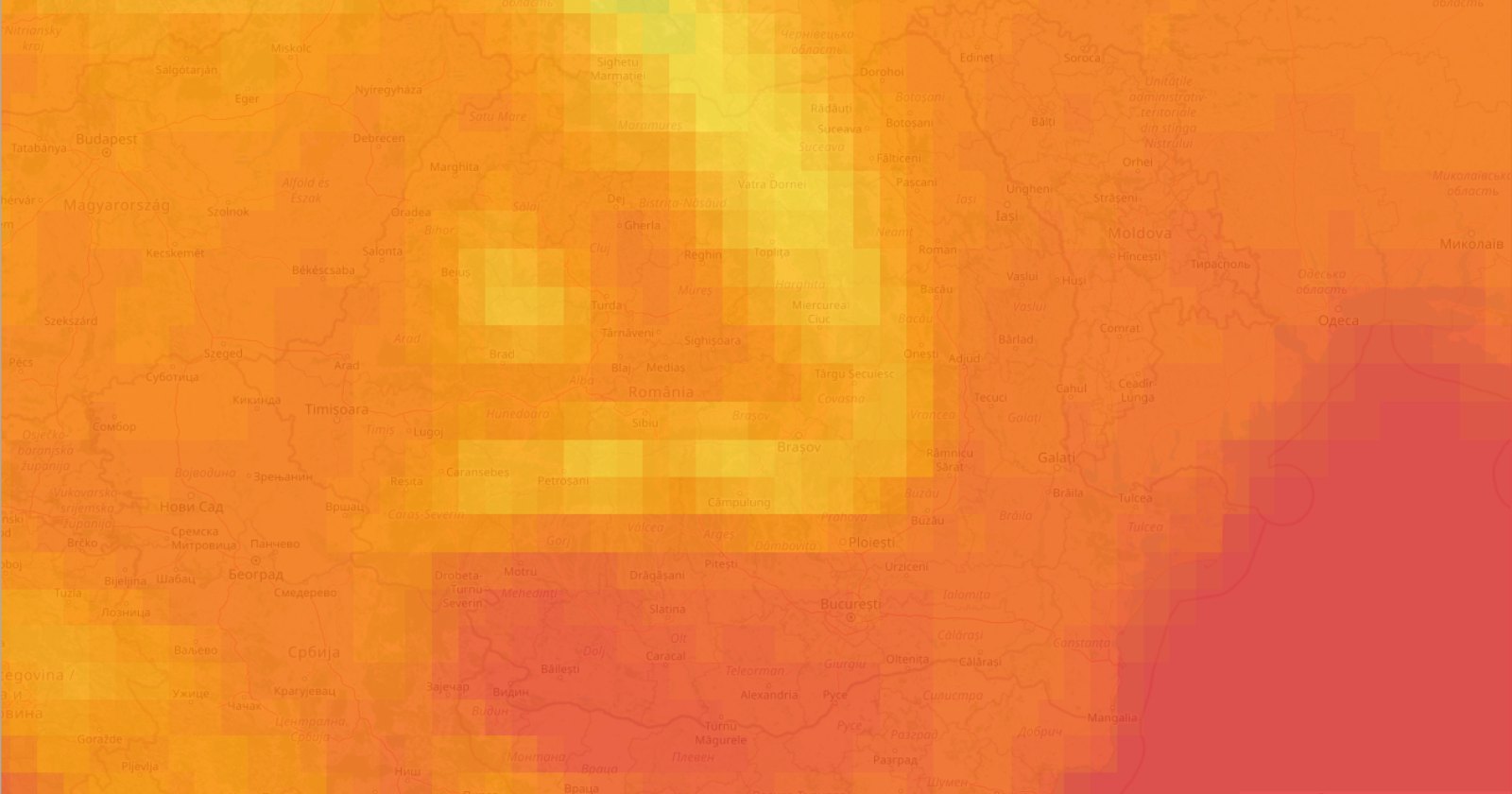
We placed our calculator face to face with PVGIS, the European reference, and with nineteen years of measurements for Brașov.
Not to prove that we were right.
But to discover where we were wrong.
The result gave us pause.
Our calculator was producing about 19% less energy than PVGIS.
It was not a catastrophe. But it was too much to blame on rounding or some insignificant difference in methodology.
So we started digging.
And we found two mistakes.
Not one.
Two.
The first was in our own formula.
We had been applying the cloudiness factor to sunlight that had already been weakened by the atmosphere, when it should have been applied before that atmospheric attenuation.
The result was severe:
another 27% loss.
A genuine mistake.
The second was harder to call a mistake.
NASA’s clearness index for Brașov was approximately 11% more optimistic than the value obtained from European satellite observations.
That did not mean NASA was wrong.
It was a different set of observations, made with different instruments and covering a different period.
But now we had two deviations meeting in a rather curious place.
One pulled our result downward.
The other pushed it upward.
0.73 × 1.11 = 0.81.
Almost exactly the 19% difference we had seen against PVGIS.
Two mistakes had nearly cancelled each other out.
And that was where the real problem appeared.
If we corrected only the first mistake, our calculator would not become more accurate.
It would become approximately 11% too optimistic.
So, for the moment, we left the formula alone.
We documented everything, with the numbers and the reasoning, in our scientific document and marked the problem for the day when we could obtain data comparable to that used by PVGIS.
There is a dangerous temptation in any project like this: to repair everything the moment you find it.
But sometimes, before replacing one part of the mechanism, you must understand which other parts depend upon it.
An honest calculator does not have to pretend it is perfect. It has to know where it isn’t yet.
After that adventure, the day returned to more pleasant matters.
We added a panel that can change its inclination throughout the year: flatter in summer, steeper in winter, between two limits chosen by the user - one for snow and one for wind.
Beside annual production, we added irradiation on the plane of the panel, the same quantity PVGIS provides, using the same names so that the two results can be compared directly.
And before the day was over, we found one final adversary.
A much smaller one.
If you switched the language to English, the results table continued speaking Romanian.
Completely unmoved.
Like a waiter who has heard you perfectly well, but has decided that now is not the time to answer.
Eventually, we persuaded it to speak English.